

Does backing American players at the US Open actually pay off?
Since 2010, systematically backing US players at their home Slam has lost money. A look at 392 matches — and why the market seems to overprice home players.

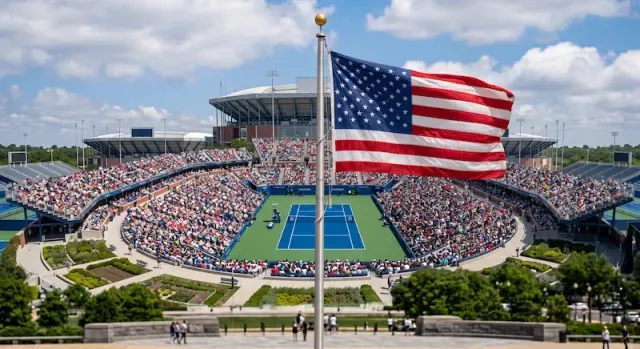
There were five American men in the round of 16 at this year's US Open (2026): Shelton, Tiafoe, Michelsen, Paul and Tien. I can't remember the last time so many Americans made it this deep at the US Open.
Is backing them a good bet?
But from a betting perspective, is backing US players at their home Grand Slam actually profitable? Or, more accurately: has it been profitable historically?
How I tested it
I went back to 2010 and looked at every US Open match between an American and a non-American player (from 2010 to 2025, the 2026 results are not included). Obviously, matches between two Americans were excluded. Then I calculated what would have happened if we had systematically backed the US player, or taken the other side. There are 392 matches with valid Pinnacle closing odds in the sample.
Flat stakes
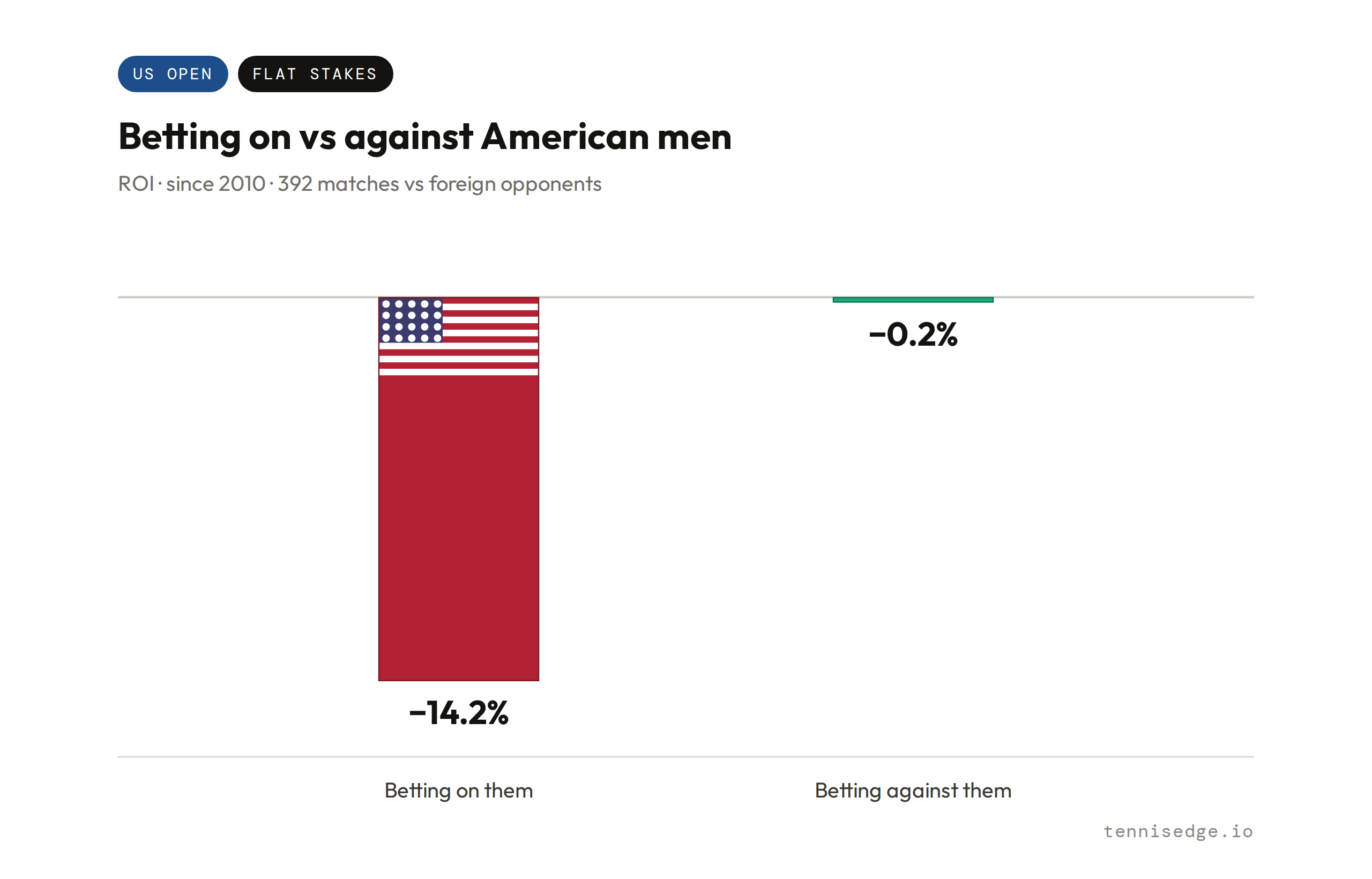
A ROI of -14.2% when betting on the Americans is a big negative result. The ROI would have been around zero when betting against them. The median odds were 2.17 when backing the American and 1.78 when backing the non-American. So there is a difference in the odds, but not a big one. In other words, it is difficult to explain this simply through favourite-longshot bias. It is not as if the Americans were mostly huge underdogs, and that alone was responsible for the gap. And the gap is certainly large.
Unit Impact staking (1/odds)
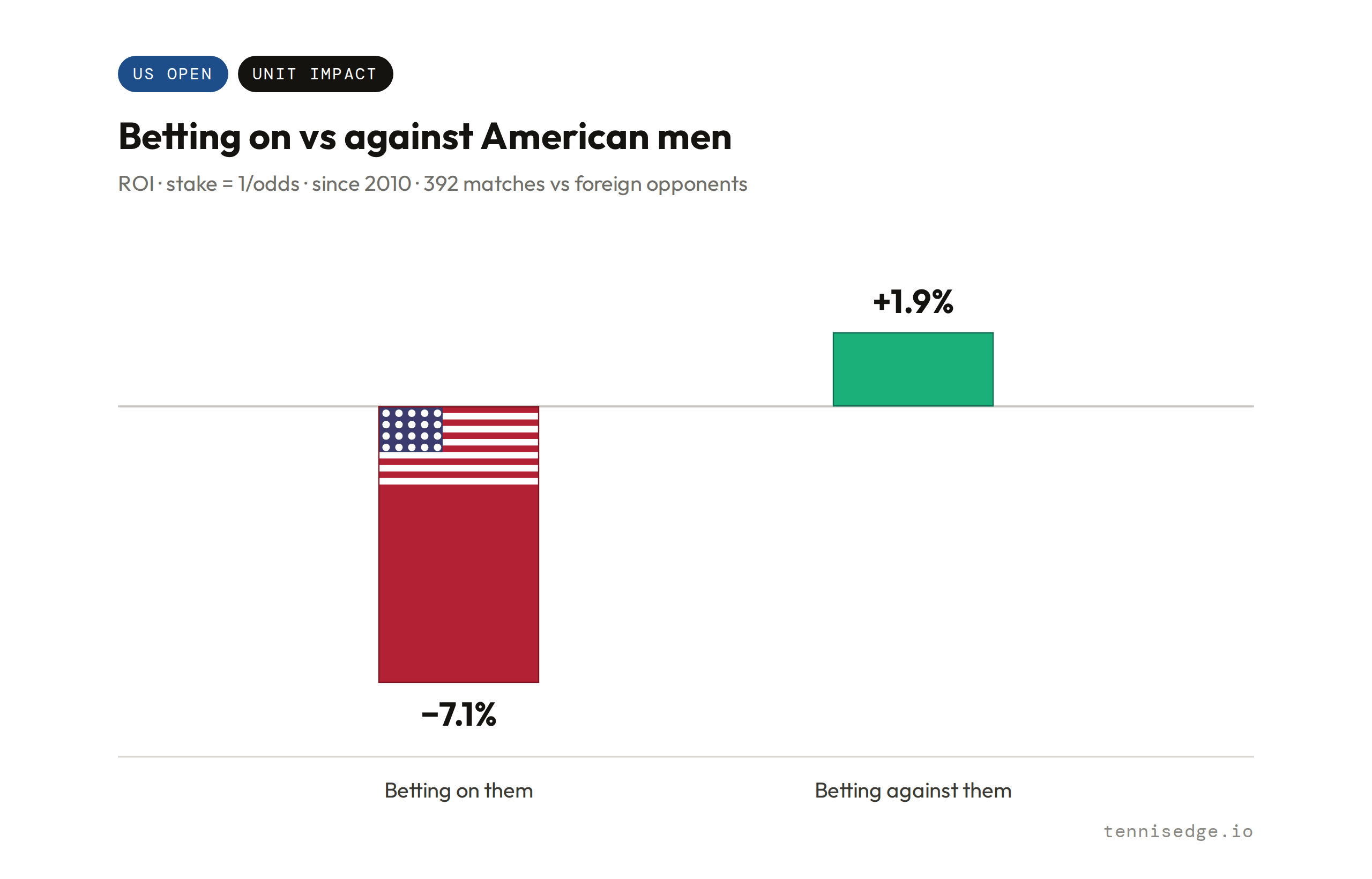
Now let's run the same calculation. Unit Impact is somewhat closer to how bettors tend to stake in practice: more money on shorter prices and less on longer ones. The results: the negative return on the Americans is reduced (-7.1%), but the gap between the two groups is still around nine percentage points. And this time, systematically backing their opponents would actually have produced a small profit.
So, what can we conclude?
A +1.9% ROI on the non-US side is very close to zero, and 392 matches are certainly not enough to say that blindly fading Americans at the US Open is a profitable strategy. But the other side of the data is more interesting. Across this sample, backing American players at the US Open has clearly been a losing proposition. Why? It seems that the market overvalues home players. The home advantage itself may be real, but the market could be giving it more weight than it deserves, pushing US players' prices slightly too low. That would be consistent with what we see here.
It's also not the only "anomaly" we've found in this market. As I showed in a separate study, the US Open is the one Grand Slam where backing favourites has quietly lost money — another sign that prices here don't always match what happens on court.
What's next
In the future, I want to extend this home-advantage analysis to the rest of the tour and see whether this apparent overpricing of local players is something specific to the US Open or a broader pattern across ATP tournaments. Moreover, with a much larger sample, the results should also be more statistically robust.


