

From Grass to Clay: Do Favorites Struggle More Than the Market Expects?
Every July, part of the ATP tour jumps from grass straight back to clay. I analyzed 1,197 matches in Gstaad, Bastad and Umag to see if this tough transition creates value on underdogs.

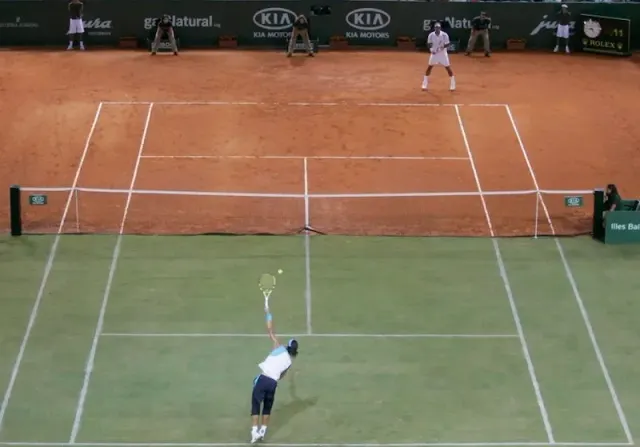
Surface transitions are always challenging for tennis players, as they often say themselves. And among all possible transitions, the most demanding is without any doubts, going from grass to clay, or from clay to grass. I even remember one player, though I can't remember who, saying that it almost feels like a different sport.
The differences are obvious. On clay, you can slide into your shots, the ball bounces much higher, and rallies tend to be longer. On grass, it's the opposite: movement is trickier, players have to stay much lower to the ground, and the serve becomes a far more decisive weapon.
That's why this part of the calendar is so interesting. Wimbledon is barely over and part of the tour is already back on clay for the three ATP 250 events in Gstaad, Bastad and Umag. The question is: does this difficult transition lead to more upsets than the betting market expects?
The hypothesis came first
One important thing before the numbers. I didn't search the calendar looking for tournaments where underdogs happened to do well. The idea came first: if the grass-to-clay switch is among the hardest transitions on tour, maybe the market doesn't price it well? Then I pulled the data for the three tournaments that fit this idea.
This matters more than it seems. If you test many different groups of matches, some of them will look special just by chance. Testing one idea that you had in advance is a much fairer test.
What the data says
I looked at every match played in Gstaad, Umag and Bastad since 2010, using Pinnacle closing odds. In total, 1,197 matches.
- Favorites ROI: -4.3% (average odds 1.51)
- Underdogs ROI: +1.3% (average odds 2.77)
To make a clean comparison, here is the rest of the best-of-three clay calendar in the same period, around 9,700 matches after excluding these three events:
- Favorites ROI: -1.8% (average odds 1.49)
- Underdogs ROI: -4.3% (average odds 2.84)
This baseline is the classic favorite-longshot bias. Both blind strategies lose money, but favorites lose much less: they outperform underdogs by around 2.5 percentage points. In Gstaad, Bastad and Umag, the relationship is reversed, and underdogs outperform favorites by more than 5.5 points. In total, the difference between the two samples is about 8 percentage points.
One more detail: the average odds are almost identical in both groups. So the reversal is not explained by these tournaments having a different type of matches or prices.
Is it statistically significant?
Does this mean blindly backing every underdog in these tournaments is profitable? Absolutely not.
First, these are historical results, and past performance never guarantees future results. Second, a +1.3% ROI is very close to break-even. And third, with average underdog odds around 2.8, variance is huge. I ran a significance test on the difference, and the result is not statistically significant: a gap this big would appear by pure chance around one time in five, even if there was no real effect. The fact that the hypothesis was defined in advance, and in this exact direction, helps a little. But not enough. Almost 1,200 matches sounds like a lot, but for betting returns at these odds, it isn't.
This is where judgment comes into play. Statistics don't always provide definitive answers. Sometimes they simply indicate that a hypothesis is plausible without proving it beyond reasonable doubt. If you believe there are sound tennis reasons why the grass-to-clay transition makes life disproportionately harder for favorites, then these numbers may reinforce that intuition, even if they don't conclusively validate it.
Why favorites?
My main thesis is uncertainty. When the tour moves from grass to clay, there is more uncertainty than in a normal week. Rankings and recent form tell you less than usual, because a lot of that form was built on a completely different surface. Some players adapt in two days, others need two weeks, and before the matches start, nobody really knows who is ready and who is not.
More uncertainty makes the real distance between the favorite and the underdog shorter. And this use to work against the favorite, because the favorite is the one with an edge to lose. Imagine a player who would normally win a match 70% of the time. In a week like this, maybe his real number is 67% or 68%. It doesn't sound like a big difference, but in betting, two or three points of probability can be the difference between a bad price and a value price.
The practical takeaway
Not that blindly betting underdogs in these events is a winning strategy. Rather, the data suggests that the usual disadvantage of backing underdogs may be smaller, or even disappear, during this particular swing of the season. If that's true, it could justify being slightly more willing than usual to side with underdogs when your own analysis already points in that direction.
What about this week?
Through the first 20 matches in Umag, Gstaad and Bastad, the favorites have completely dominated, posting a +20% ROI compared to around -30% for the underdogs. Of course, 20 matches tell us absolutely nothing. But I prefer to publish this now, with the first results going against the idea, rather than wait for a better moment. Let's see how things develop from here.


