

Match Fixing in Tennis: How It Works and Why It's Declining
Match-fixing in tennis won’t disappear, but stronger oversight and higher prize money suggest it’s declining — and it should keep falling over the next few years.

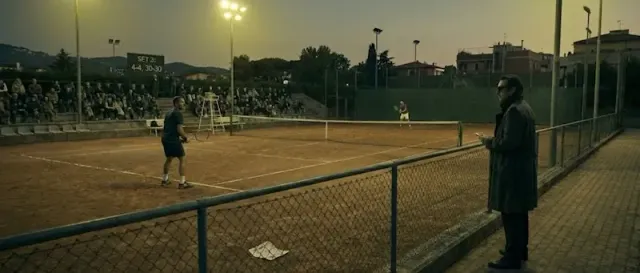
Humbert’s phone check in the final-set tie-break and the match-fixing speculation that followed
In early 2026, at the ATP 250 of Montpellier, the French Tennis Ugo Humbert—ranked ATP #38 at the time— was leading 4–3 in the final-set tie-break against Mannarino. Well, Humbert went to his chair, checked his phone, and came back to play. This was strange, because it was not the usual pause after the 6 points in a tie-break. It really seemed he went specifically to check his phone.
After that, he lost the following four points and lost the tie-break and the match. Many users on X exploded with speculation, discussing this heavily and claiming that Humbert, after reading his phone, lost the match on purpose — and that therefore he fixed the match.
My opinion on the Phone moment
First: yes, it’s odd that when you don’t have to go to your chair, you do it anyway, pick up your phone and read something there. It really stands out.
But if Humbert had wanted to fix this match, he would not have gone so far as to have 3 match points on Mannarino’s serve.
Mannarino can make a double fault or miss a shot. Any player trying to fix a match avoids putting himself in a spot where the opponent can lose the point by accident. That doesn’t fit the incentives.
So no: Humbert did not fix this match. That said…
How match-fixing in tennis works
Does match-fixing happen in tennis? Yes. Match-fixing definitely occurs in tennis. But that’s not what I saw here, in the Humbert-Mannarino match..
And since the topic came up, let me explain how match-fixing in tennis can work.
First of all, I’ll start with a message from the Indian tennis player Sumit Nagal, who said this in September 2023:
“If I look at my bank balance, I have what I had at the start of the year: 900€. I don't have any big sponsor. I don't have anything in savings. I'm just break even.”
I want to clarify that Sumit Nagal has nothing to do with match-fixing. He is likely an honest player who has never fixed a match.
But his words serve as an example to explain what can happen with other players in the world of tennis, for whom tournament prizes barely suffice to make a living.
Surely, many players — given the financial problems that the profession entails — have considered fixing a match at some point. And many of them will have done so.
Moreover, tennis is an ideal sport for it. Liquidity is high and players don’t even need to arrange anything with their opponents; they can simply lose on purpose, without obvious red flags. It’s easy to miss balls, make errors and not be as intense.
One common setup I’ve been told about is that they bet on the “Over” (betting that total games/sets will exceed a threshold) in games or sets and agree that one of them wins the first set, the other the second, and they play the match “fairly” in the third set. It’s a more subtle form of fixing since the match is really contested in the last set.
Also, the profits in live can be much higher if you lay the fixer when he is leading the match (betting against him to lose). Imagine a player who is the favourite pre-match, wins the first set, and is about to win the match in the second set with a break up. The live odds on the opponent can be huge, and you don’t need much stake to win a lot at those prices. I’m sure many fixes have occurred in this way.
Why most fixes go unnoticed (and why it used to feel worse)
For a tennis bettor, in the long run, it should make no difference. Sometimes fixes will lead to wins, other times to losses. You won’t even realize a match is fixed. In other words, most fixes go unnoticed.
Having said this, I’ve been betting for many years and I can honestly say that in the past, I perceived many more fixes than I do today. Pre-match odds moved suspiciously many times. Not to mention live odds movement.
Yes, every few weeks, there were strange moves in the odds.
The Davydenko example
I saw firsthand what happened in that Davydenko match in Sopot 2007 against the Argentinean Vassallo-Argüello.
I was watching the match live on my screen, along with the odds movement on Betfair (see chart below), and I couldn’t believe what was happening. The odds seemed to move contrary to what was expected, with no apparent physical issue with Davydenko. Davydenko was winning and odds were moving against him, it was crazy.
More than €5 Million were matched in Betfair Exchange, which is huge for a Round of 16 match at an ATP tournament.
Although I’m convinced that most of that money was wagered by bettors like me, who—without knowing anything—just had a strong suspicion the match was fixed after seeing the strange odds movement.
The Russian was winning comfortably, yet the odds were moving strongly against him.
Unsurprisingly, Davydenko retired and Vassallo won. A lot of money was bet against Davydenko. Clearly, someone had information.
There was no sign that anything was wrong with him — he hadn’t fallen down, nor had he made any strange gesture.
The Snowball effect
In the past, I also observed what I call the “snowball effect”, and I was even run over by it sometimes.
When fixes were not uncommon, one small odds movement when liquidity was low sometimes made other bettors think there was a fix in place. So they contributed to the fixing narrative by moving the odds even more.
This created situations where the market believed there was a fix, but by the end of the match, it was clear there wasn’t. So all the bettors who followed the herd lost their bets.
Therefore, in the end, it wasn’t so easy to determine if a match was fixed, as there were many false alarms.
Nowadays, and for several years now, I scarcely see any strange pre-match or live odds movements on ATP matches. I must note that I cannot confirm the same for Challengers or ITFs, where the liquidity offered by bookies is much lower, because I do not follow them.
Is there data on match-fixing?
The International Tennis Integrity Agency (ITIA) publishes quarterly and annual reports detailing the alerts received for suspicious betting patterns.
In 2025 there were 68 alerts, but in 2024 they received 95, in 2023: 101, in 2022: 109, and 113: in 2021.
These are alerts triggered by suspicious movements in betting odds. The agency emphasizes that an alert of this kind does not imply a proven fix, but that unusual betting patterns can occur for various reasons, such as poorly set betting odds, bettors getting it right, fatigue, injuries or even tipsters driving odds.
So if you’re a tennis tipster with a big following, just know you might have triggered some of those ITIA alerts :-)
Therefore, we can state that an “alert” is not direct proof of match-fixing, but a warning from the betting industry that triggers an investigation.
This gradual decline suggests that the number of fixed matches is probably going down.
It is evident that, currently, those orchestrating fixes exercise much greater caution, because match-fixing undergoes much more scrutiny and investigation. But it can still be done.
It is likely that some players are using more sophisticated techniques to bet without triggering alerts, such as using accounts of unrelated friends (not even family) across multiple bookmakers, keeping stake sizes below suspicious thresholds, and betting live, where volume is higher and therefore individual bets can pass more unnoticed.
Why I also think fixing is declining: money is improving
Another reason I believe match-fixing is declining is that since 2023 the ATP has restructured parts of the system to make the sport more sustainable for players who are not at the very top of the rankings.
In 2024, the ATP launched a historic initiative called Baseline, designed to guarantee a minimum income for professional players regardless of results.
Guaranteed income (2025–2026):
- Top 100: minimum of $300,000 USD per year
- Ranks 101–175: minimum of $200,000 USD
- Ranks 176–250: minimum of $100,000 USD
Injury protection: if a player drops below a certain number of tournaments due to injury, the ATP covers part of their lost income.
Support for first-timers: players who enter the Top 125 for the first time receive an upfront payment to fund their coaching team and travel.
Grand Slam Prizes
Grand Slam prize money keeps rising. Just playing the first round pays much more than in the past:
In addition, the four Grand Slams have increased prize money aggressively, with a particular focus on paying better to players who lose in the early rounds.
WTA, Challengers and ITFs
For its part, the WTA has formally committed that by 2033, all combined tournaments (ATP/WTA 1000 and 500) will pay exactly the same to men and women. In addition, many 1000 and 500 tournaments (such as Rome, Madrid and Cincinnati) have already equalized prize money or are in the process of doing so through a gradual increase plan.
As for Challengers and ITFs, to prevent young players from dropping out due to lack of funds, the ITF and the ATP have injected capital at the base of the sport:
ATP Challenger Tour: prize money has increased by 167% since 2022. In 2026, the total Challenger circuit purse will reach a record $32.4 million.
ITF (M15/W15 levels): prize money increased from $15,000 to $20,000 in 2025, and M25/W35 tournaments increased to $30,000.
Mandatory hospitality: now, many more ITF-level tournaments are required to cover player accommodation, an expense that used to consume a large share of their earnings.
In short, tennis is moving away from being a “winner-takes-all” sport, and trying to ensure that the Top 250 can make a decent living from the profession without relying exclusively on winning titles.
Mafias
It’s also said that some Challenger or ITF players are pressured — even threatened — by criminal groups to throw matches.
I can’t verify how widespread this really is, but I wouldn’t dismiss it either. These circuits move less money, have less media scrutiny, and many players are under serious financial stress — a combination that can make them more vulnerable to coercion.
If this is happening, it’s not just “corruption” in the abstract: it’s intimidation, fear, and a system where a player may feel they have no safe way out.
Conclusion
To sum up, although match-fixing will still exist, greater control by the authorities and rising prize money are making it likely — as the numbers already suggest — that the number of fixed matches has decreased, and will probably continue to decline over the next few years. And that is good news for everyone.


