

Indian Wells 2026: Why the Courts Are Playing Faster Than Expected
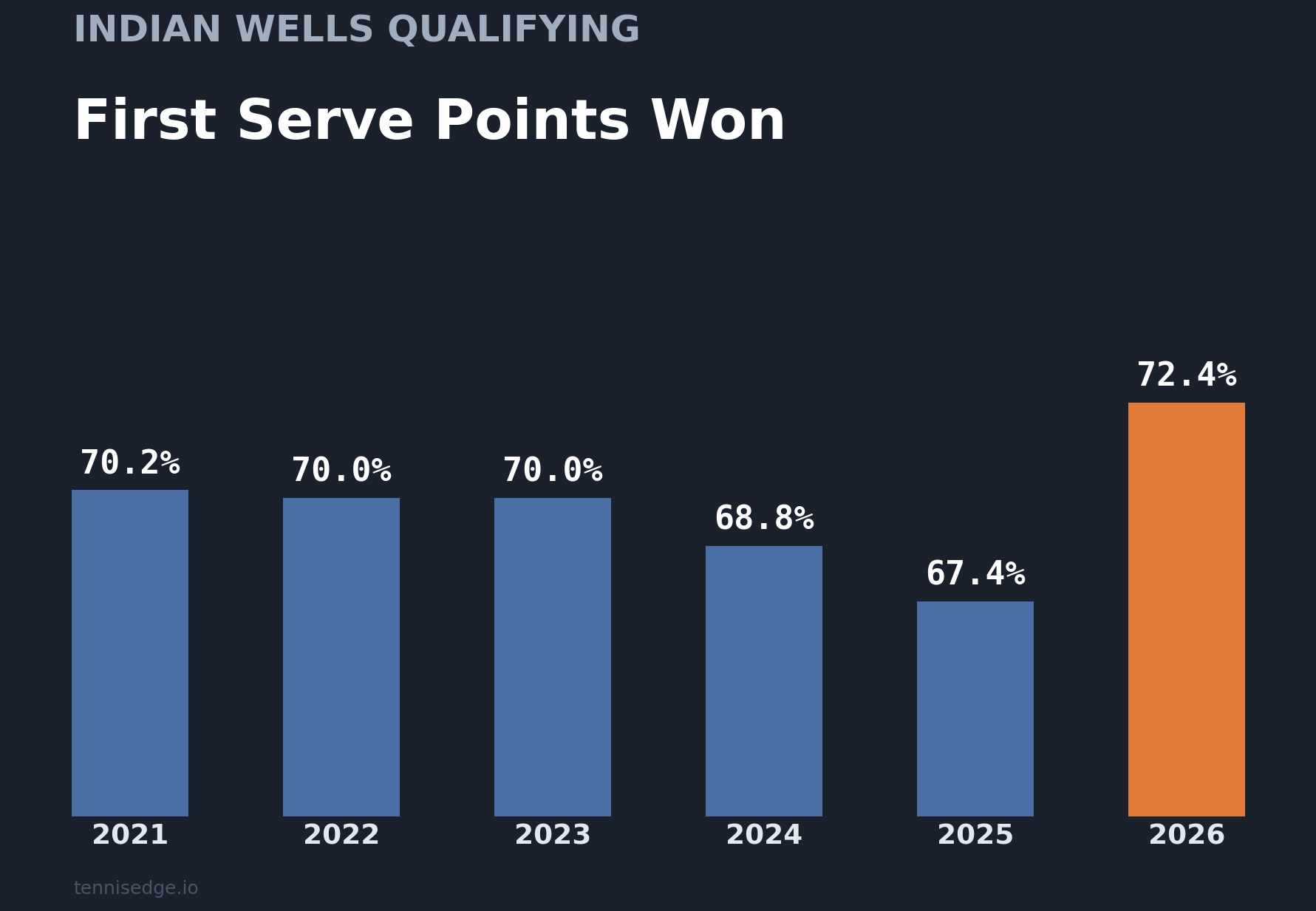
(4 - 15 March) Indian Wells 2026 qualifying data came in at 72.4% first serve points won — the highest in at least five years. Here's what the numbers tell us.

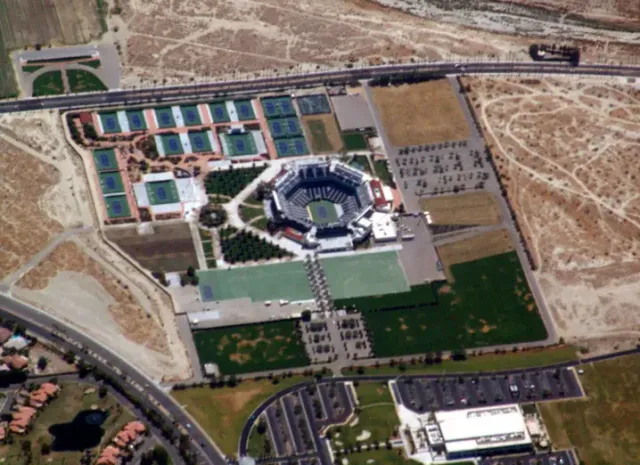
Indian Wells has long been considered one of the slowest hard-court tournaments on the circuit — and the data has consistently backed that up. In fact, over the past five years, no outdoor hard-court tournament on the ATP circuit has produced a lower first serve points won average than Indian Wells — just 70.3%.
The Tennis Court Pace Index (CPI) points in the same direction — though it's worth noting that CPI captures not just the physical surface, but also environmental conditions such as temperature, humidity and wind, which means it should be read as an indicator rather than a pure measure of surface speed. With that caveat in mind, the numbers are still telling: in 2021 it stood at 32.0, edged up to 35.4 in 2023 and 36.9 in 2024 — figures only marginally higher than clay M1000 events, which typically sit in the high twenties.
The 2025 edition brought a change that was supposed to alter that dynamic. The tournament replaced its old Plexipave courts with Laykold — the same surface used at the US Open and Miami Open. Laykold courts are generally faster and produce a lower bounce, so a speed increase seemed reasonable to expect. However, it never materialised. The CPI actually dropped further to 30.9, and last year's players left no room for interpretation:
Alcaraz: "The court is more or less the same — very slow and with a lot of bounce. If they hadn't told me they changed it, I would think it's still the same."
Medvedev: "I don't notice any difference, but if I had to say something, I'd say it's even slower than before."
The "clay-like" comparison came up repeatedly. Djokovic put it in stark terms: "The ball bounces much higher on the center court than on clay courts. I struggled a lot with that; I couldn't find my rhythm." Others echoed the same sentiment:
Tsitsipas: "The surface here is rougher on the top layer. It makes the balls bounce a little bit more and not slide as much. It reminds me a lot of clay. It literally feels like a hard-court version of clay."
Norrie: "The ball is bouncing; it is tough to finish points. It allowed me to stay relaxed and rip the ball."
Fils: "During the day it's a bit more intense... we were playing at hip height."
Shapovalov: "The court is pretty slow. It's a good combo for me — I have time for my big wind-ups, but I can still play aggressive."
A New Variable: The Switch to Dunlop
For 2026, the surface equation gained one more variable: the tournament switched from Penn to Dunlop balls. Taylor Fritz had already flagged what that combination could produce:
"In places like Delray, you play two games and the balls already look like balloons. You can't hit a winner even if you hit it as hard as you can. They become huge. The issue isn't the brand itself, it's the combination of Dunlop and a slow court. The advantage is huge for players who move better, because you can't hit winners and nobody makes mistakes."
A slow surface that grabs the ball plus a ball that fluffs up quickly — the logical conclusion was a tournament playing even slower than 2025. That was my working hypothesis going into the first week.
However, the data forced me to revise it.
What the Numbers Actually Show
Looking at 36 qualifying matches in 2026 — over 3,200 first serve service points, a meaningful sample — they came in at 72.4%. That's not just higher than 2025's qualifying figure of 67.4%. It's the highest qualifying number at Indian Wells going back at least five years, and by a significant margin. A 5-percentage-point gap across more than 3,200 points is too large to be explained by variance alone.
Then came the first 16 main draw matches: 74.8% first serve points won. Last year's full-tournament figure was 68.8%.
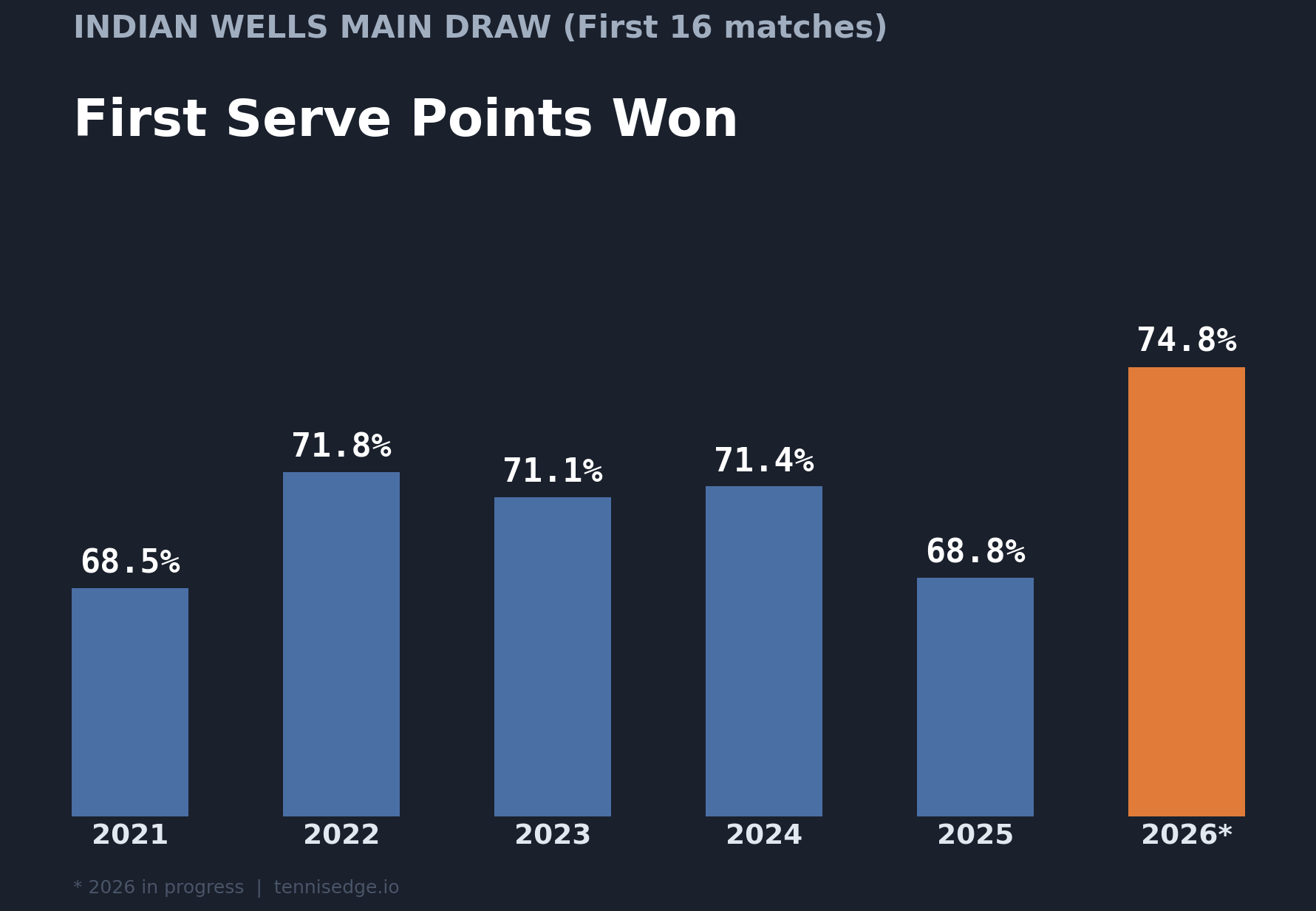
Some of you might be thinking that it's only 16 matches. And you're right — it is a very small sample, and this figure might come down as the tournament progresses.
But when you combine the qualifying data with this first main draw sample, I'm fairly confident the tournament will play faster this year than last. Yes, variance exists, and yes, the draw composition changes from year to year. But the gap versus 2025 is large enough that variance alone doesn't explain it.
Making Sense of the Contradiction
So what's happening? Two things changed between 2025 and 2026: the temperature and the balls.
The Temperature Factor
First, the temperatures — a variable I hadn't factored into my initial analysis. Looking at the weather data now, the early rounds in 2025 coincided with unusually mild conditions, with daily highs in the low 20s Celsius (around 68–73°F). And this matters more than it might seem: the early rounds are when the highest number of matches are played, which means they carry the most statistical weight in any full-tournament figure. Since CPI also captures environmental conditions, the 30.9 figure in 2025 may reflect those cold early-round conditions as much as the surface itself.
This year, temperatures are already running in the high 20s to low 30s Celsius (82–90°F) — and forecasts suggest they will climb further above 30°C (86°F) as the tournament progresses. Cold air is denser, which slows ball travel and suppresses serve effectiveness. If temperatures keep rising, that could push conditions further toward the faster side — potentially making this one of the quickest editions of Indian Wells in recent history.
The Ball Change
Second, the balls. The switch from Penn to Dunlop is the one concrete change we can point to — but its effect on speed is not straightforward. Fritz warned that Dunlop balls fluff up quickly on abrasive surfaces, which would make them slower. Berrettini, on the other hand, noted feeling more control with the new ball — which could suggest less pace, or simply a different feel. Neither clearly points to a faster ball.
What we can say is that a ball change of this magnitude will alter conditions in ways that are difficult to predict in advance — and the data suggests something has shifted. Whether the Dunlop ball is contributing to faster play, or whether the temperature difference alone explains the gap, is something the data over the coming days should help clarify.
Berrettini described the overall conditions from the inside:
"It's dry, so the ball flies, but the courts are rough. This year with the ball change I feel like I have more control. During the match the conditions changed a lot — at the beginning it was sunny and the ball was moving more, then after the sun went down I had more control."
"Many have always told me this tournament is suited to my characteristics. I think the combination of fast air and rough courts can be favorable."
Slow on the Ground, Fast Through the Air
This is the paradox that defines Indian Wells 2026. The surface remains what it has always been: rough, high-bouncing, physically demanding. The bounce description from this week's players is entirely consistent with previous years:
Bellucci: "The hardest thing was the bounce. The ball jumps really high. If I stand close on the return it jumps over my shoulder, especially on second serves."
But through the air, the ball is moving faster than the surface characteristics alone would suggest — driven by warmer temperatures, the ball change, or perhaps a combination of both.
What is clear is the day/night split, which Berrettini flagged this week:
"The outside courts are so different. Yesterday I played mixed doubles on court 2 at night and it felt like a different sport. This tournament is one of the ones where you feel the most difference between the day and night."
Whatever the exact cause, the data so far points clearly in one direction: Indian Wells 2026 is playing faster — and potentially significantly faster — than anything we've seen here in recent years.
A practical note for bettors: match time matters more than usual at Indian Wells this year. Day sessions, with warmer temperatures and a livelier ball through the air, will favour bigger servers and aggressive baseliners. Night sessions, with cooler and denser air, will pull conditions back toward the slower, grittier end — benefiting clay-court profiles and grinders. Before placing any bet, check when the match is scheduled. It could be the difference between two very different courts.
I'll be tracking the serve and rally-length data — as well as the CPI figures once they become available — as the tournament progresses.
Draws
Here’s the link to the Qualies and Main draws — you can check it anytime to follow the latest updates and see which players advance through each round.